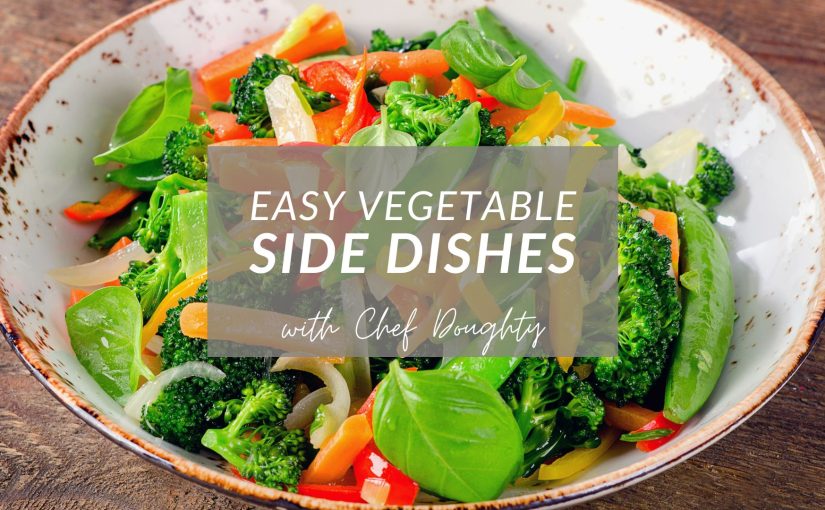
Vegetables don’t have to be an afterthought—or a chore—to be delicious. With the right techniques, a simple carrot, bunch of greens, or bag of spinach can become the most memorable part of the meal. These recipes and tips breas down approachable, flexible methods for preparing vegetables that work for busy weeknights and more intentional cooking alike, from quick sautéing to slow, flavor-building simmers.
Along the way, you’ll learn how to enhance vegetables with aromatics, herbs, liquids, and finishing touches, why fully evaporating cooking liquid is key to great flavor, and how color, texture, and technique all play a role in the final dish. To bring it all together, the article also includes practical, kitchen-tested recipes—like perfectly cooked fresh spinach and a vibrant spinach dish with red peppers and shiitake mushrooms—designed to help you cook vegetables with confidence, creativity, and maximum flavor.
The Saute/Simmer Method
Any vegetable can be sautéed. Start with the whole piece and peel or rinse, if needed. The pieces should not be large but small to medium-sized. Cut into consistently sized pieces so that the vegetable cooks evenly.
FAST-COOKING VEGETABLES
Select the appropriate size pan for the job. The pan should be neither overloaded with vegetables nor too big for the job. The vegetable should fit comfortably in the pan. Heat the saute pan or frying pan over medium heat and, when warmed, then add a little oil or butter. Swirl the pan to coat the entire surface. Add the cut vegetables and allow to sit in the pan undisturbed for a minute or two. This is your testing period. If the vegetable browns too quickly you will reduce the heat. If nothing is happening, color-wise, then you will increase the heat after a minute. Toss the vegetable with the chef’s technique or use a spatula. Every couple of minutes toss again trying to get an even golden color on all sides. Add a little more oil if you feel things are getting dry OR add a few tablespoons of water to help expedite the cooking. You will toss and check for coloring and moisture every couple of minutes until the pieces reach the desired point of doneness. All liquid should be allowed to evaporate at the end of the cooking period. There should be no liquid in the pan. You absolutely need to finish the cooking period with all liquid having reduced and evaporated.
Flavor Enhancers for Fast-cooking Vegetables:
At any point of the cooking period you are welcome to add bits of chopped onion, fresh herbs, aromatics like garlic and ginger. Towards the end of the cooking period you can splash with soy sauce, Worcestershire, tamari, bottled dressings or Asian sauces. Lastly, taste for salt and pepper.
SLOW-COOKING VEGETABLES
Select the appropriate size pan for the job. The pan should be neither overloaded with vegetables nor too big for the job. The vegetable should fit comfortably in the pan. Add the cut vegetable, a tablespoon of oil or butter (or more depending on the quantity being cooked) and enough water to generously cover the bottom of the pan, usually½ to one cup of liquid. Bring to a simmer and cover with a lid. After two minutes return to the pan and stir the contents. The water level should be reduced. Cover and continue cooking. Return to the pan and stir again. Add more liquid if things appear dry. Repeat this step during the bulk of the cooking period. As the vegetable approaches being done, then remove the lid and allow all liquid to evaporate and then continue to cook the food briefly in the dry pan. All the cooking liquid must be evaporated before proceeding. During this final period the vegetable will develop some light color and caramelization which provide the maximum flavor. It is an essential step.
Flavor Enhancers for Slow-cooking Vegetables:
When setting up the pan with water, oil and the vegetable, go ahead and include any
of these ingredients. First of all you can use chicken stock or fruit juice in place of the water for an initial point of flavor impact. Add slices of ginger, onions and garlic whose flavor can be infused in the liquid and ultimately the food. Dry herbs mellow nicely in the cooking liquid. Lemon and orange rinds provide great accent flavor. Carrots especially like the sweetness of honey or maple syrup or a little brown sugar. The key is to add these ingredients early so their essence can permeate throughout the cooking period. When adding these ingredients it is important to still evaporate or reduce all liquid so that the flavor of these added ingredients remains on the food.
VEGETABLES WITH DISTINCTION
Vegetables can help define the theme of a meal. A huge array of ingredients can be added to vegetables to move them in an ethnic direction or simply use them to round out a meal in terms of color, nutrition and texture. Following is a list of potential embellishing ingredients:
1. Adding herbs and spices (refer to chart at the beginning of book)
2. Using aromatic vegetables like onions and garlic during the cooking period
3. Cooking the vegetables in different liquids, i.e. broths and juices, and also using rinds of lemons and oranges for added flavor
4. Using a variety of oils and butters
5. Including nuts (chopped, sliced or whole) and quite often toasted bread crumbs
6. Adding last-minute ingredients like olives, peppers, cheese, diced egg …
7. Creating a combination of two or more vegetables
Tips for cooking green vegetables:
Cook your green vegetables uncovered. That allows the acids naturally found in the vegetable to escape while cooking. If you cover your vegetables you will lose some of that brightness. Overcooking can also lead to loss of color. The longer you cook your vegetables the duller they become.
Tips for cooking red vegetables:
Acids are an enemy to green vegetables but are friendly to red vegetables. Acids actually help them turn a brighter red. Red cabbage is a prime example. You may have noticed that many recipes for red cabbage include the addition of acid, perhaps tart apples and vinegar, something acidic. That’s because the acid helps produce a more vibrant red.
Beets are in a category by themselves. When you’re cooking beets by either roasting or simply boiling them in water they should be left whole and unpeeled. Even the root and stem end should be left intact. If you peel and cut the beet before you cook it, it will bleed and lose a lot of its color. After they’ve cooked and cooled a bit the skins will slip right off and that bright deep color will still be intact!
THE SUCCESSFUL SIMMER OR SAUTE
The key to successfully simmer and saute vegetables is to make sure that all the cooking liquid has evaporated before serving. When you pour off cooking liquid you pour out flavor and nutrition. Learn to use the right amount of liquid for a vegetable. It is always better to start with less liquid, and add more, should you need more, rather than be caught with extra liquid in the pan that carries with it flavor and nutrition when it is poured down the drain.
COOKING FRESH SPINACH
This is unique and gets its own instruction. The pre-washed bags of spinach make this superquick and a welcome food at the table. Heat a larger-sized saute pan over medium heat and coat the bottom with a little butter or oil. If including garlic or another aromatic, this would be the time to include it. Dump the entire contents of the bag in the pan and increase the heat. You
may need to do this gradually to accommodate all the leaves. Pour what you can into the pan. Stir with a spatula. When it begins to shrink, add more and repeat this process until you have used the intended amount. Allow to cook further for another minute or two. Taste for salt and pepper. One pound of spinach yields 4-6 portions.
Creamed Spinach:
Add a splash of heavy cream when all the leaves have wilted and allow to simmer for a minute or two. You can also add a pinch of nutmeg for a very European flavor.
SPINACH WITH RED PEPPERS AND SHIITAKE MUSHROOMS
Ingredients:
One pound fresh spinach leaves, washed and trimmed
½ red bell pepper, cut into thin strips
4-6 shiitake mushrooms, stems removed and caps thinly sliced
Rice vinegar to deglaze vegetable pan
1 tablespoon each vegetable oil and sesame oil
Squirt of hoisin sauce, oyster sauce, or another favorite prepared Asian sauce (optional)
Salt and sugar to taste
Directions:
In a large saute pan heat both oils. Add sliced peppers and shiitake mushrooms and brown over high heat. When browning is close to complete, begin to add the spinach by large handfuls, cooking and shrinking each and then adding more. When all the spinach has been added, then include two tablespoons of the Asian sauce and taste for salt and pepper. A few red pepper flakes may also be added.
Meet Chef Doughty

We know her as part owner of Silvercreek Realty Group and the smiling face behind the brokerage accounting department, but did you know that Joyce Doughty has an affinity for culinary arts?
Chef Doughty is a successful food writer and restaurateur who hosted the nationally syndicated daily Public Radio food program “Food for Thought” for 17 years and was also host of the local ABC affiliate morning program “In the Kitchen” highlighting practical recipes and techniques for the kitchen. Recipient of the James Beard Foundation Top Three Chefs in Idaho Award and owner and chef of Idaho’s critically acclaimed Doughty’s Bistro. Chef Doughty was trained at Le Cordon Bleu and received her executive chef certification from the American Culinary Foundation.