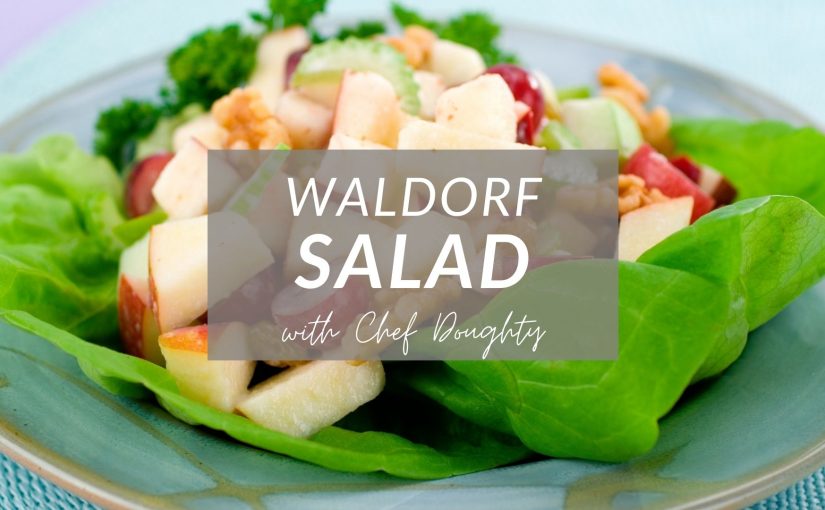
Near the turn of the century, the maitre d’hotel of the Waldorf-Astoria hotel in New York City featured a salad that became a staple in the American household. Few salads have stood the test of time quite like the Waldorf. This simple combination of apples, celery, and mayonnaise quickly became a staple in American kitchens. Over the years, the recipe has evolved—welcoming ingredients like grapes and walnuts and inspiring countless creative variations.
What makes a Waldorf salad so appealing is its flexibility. The classic version is crisp, creamy, and slightly sweet, but it can easily be adapted to match the season, a dinner theme, or simply what you have in the refrigerator. Below you’ll find the traditional recipe along with ideas for swapping ingredients and adding new flavors—from hearty entrée versions to bold twists with cheese or smoky spice. Whether you stick with tradition or experiment a little, the Waldorf remains a timeless salad that’s both elegant and easy to prepare.
THE BASIC WALDORF
2 large apples, seeded and cut into ½-inch cubes
2 larger stalks of celery, chopped
1 cup red seedless grapes, halved
¾ cup chopped walnuts
½ cup mayonnaise
Sugar to taste
Seasoned rice vinegar to taste
All ingredients are tossed and mixed well.
That said, every ingredient in this recipe, has an alternate:
Apple – this is the one consistent ingredient but can be any variety, red or green. The secret to the apples is to keep the cubes on the smaller side so that each forkful can have elements of each ingredient, not just apple.
Celery – great to keep in the salad for crunch but could be omitted or substituted with fresh fennel. If celery strings get in your way, you can easily peel the backside and remove all the offenders before cutting.
Grapes – the salad actually works better with grapes in the form of raisins. Golden raisins, regular raisins, currants, dried cherries, cranberries and even small pieces of dates.
Walnuts – nuts are an integral part of the salad and the walnuts can be replaced with pecans, cashews, almonds and even part sunflower seed.
Binding agent – mayonnaise, salad dressing, sour cream, part yogurt, any creamy binder.
Seasonings – every salad will need to be tasted for salt and pepper, sometimes sugar or honey, all to taste. A splash of vinegar or lemon juice can brighten the salad and help the flesh of the apples stay light in color. Dijon mustard and horseradish are also great flavor boosters.
Variations:
Waldorf as an entree salad – in this case, pieces of cooked chicken or ham are added to the base salad and then served on a bed of lettuce for a very satisfying meal, on its own.
South of the border Waldorf – add some minced chipotle peppers to the dressing for a smoky southern taste and of course, for some added kick. Chopped cilantro and some green onion could also be included.
Waldorf a la cheese – add some crumbles of blue cheese, Gorgonzola or feta. Red or green onions could also be included.
Meet Chef Doughty

We know her as part owner of Silvercreek Realty Group and the smiling face behind the brokerage accounting department, but did you know that Joyce Doughty has an affinity for culinary arts?
Chef Doughty is a successful food writer and restaurateur who hosted the nationally syndicated daily Public Radio food program “Food for Thought” for 17 years and was also host of the local ABC affiliate morning program “In the Kitchen” highlighting practical recipes and techniques for the kitchen. Recipient of the James Beard Foundation Top Three Chefs in Idaho Award and owner and chef of Idaho’s critically acclaimed Doughty’s Bistro. Chef Doughty was trained at Le Cordon Bleu and received her executive chef certification from the American Culinary Foundation.